Almond investment expands Portugal’s nut production and processing capacity
Portugal’s nut sector has expanded over the past decade as investment in orchards, irrigation, mechanized harvesting and processing increased almond capacity. PDR2020 supported 2,291 projects covering about 26,156 hectares, with almonds accounting for 77% of the area involved.
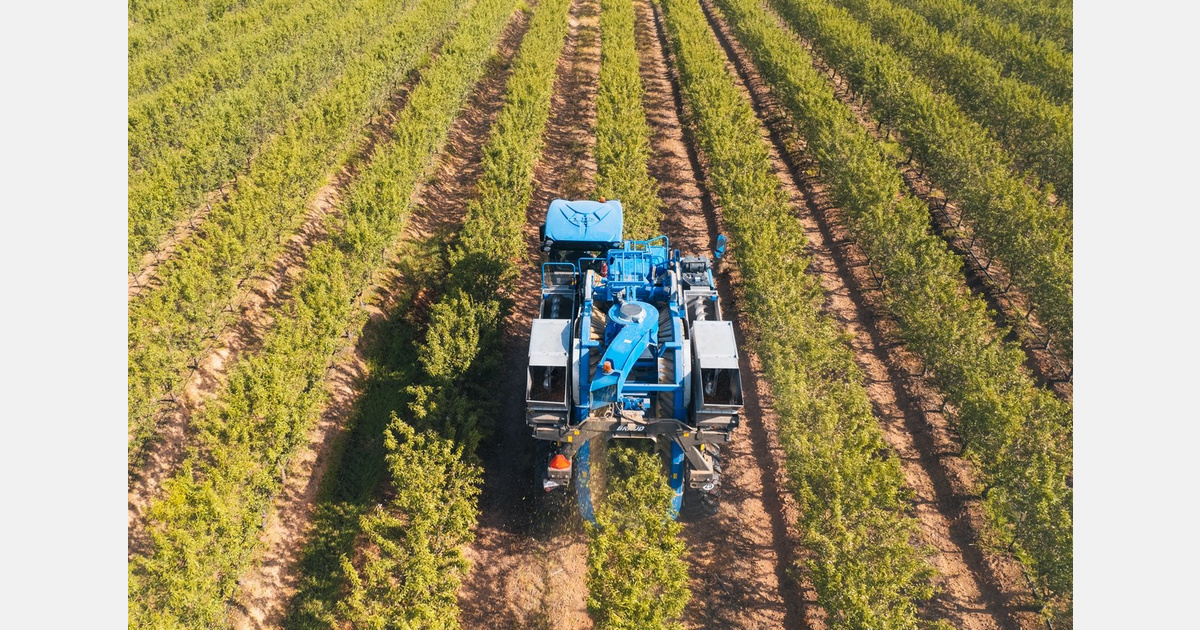
Almonds lead a decade of expansion
Portugal’s nut industry has expanded significantly over the past decade, led by almonds and supported by investment across production, irrigation, harvesting and processing. FreshPlaza reported that the country has become one of Europe’s leading almond producers as both cultivated area and output have increased.
Nuno Russo, executive director of Portugal Nuts, said the industry had also strengthened its position in walnuts and chestnuts, while pistachio production had emerged more recently. He attributed the growth to modern orchard development, efficient irrigation systems, mechanized harvesting and advanced processing facilities.
Nearly €300 million invested through PDR2020
Data from the PDR2020 program show that nearly €300 million was invested in 2,291 projects supporting the establishment or modernization of approximately 26,156 hectares of nut orchards. According to Russo, about €119 million of the total was provided as public support.
Almonds represented 77% of the area covered by the projects, compared with 15% for chestnuts and 6% for walnuts. The figures underline the central role of almonds in Portugal’s capacity expansion and indicate where the largest increase in future supply is likely to emerge as recently planted orchards mature.
Investment has extended beyond the farm. Producers have adopted precision agriculture and data-based orchard management, while exporters have expanded processing and packaging capacity. This allows suppliers to sell premium shelled nuts and other higher-value products instead of relying only on undifferentiated commodities.
Maturing orchards raise supply prospects
Many orchards planted in recent years are now approaching maturity and full productive capacity. Russo expects their development to increase overall output without requiring a proportional expansion in planted area, enabling the industry to serve both Portugal’s domestic market and foreign customers.
Demand is being supported by the popularity of healthy snacks, plant-based diets and nutrient-rich foods. Almonds remain the sector’s principal product, while walnuts are gaining attention because of their nutritional profile and versatility in food manufacturing. Retail, food processing and ingredient markets offer potential outlets for the additional supply.
Water and market volatility remain risks
The expansion also increases exposure to climate and market risks. Water availability, prolonged drought, extreme temperatures and unpredictable weather can affect yields and production consistency. Producers are responding with more efficient irrigation, precision farming, data tools for resource management and varieties better suited to changing conditions.
International market volatility presents another challenge. Russo said exporters were increasingly emphasizing value-added processing, product differentiation and market diversification rather than competing solely on volume. Traceability, sustainability and quality certification are also becoming more important purchasing criteria. The industry’s next phase will therefore depend not only on larger harvests, but on whether processors and exporters can convert additional almond and walnut volumes into consistently differentiated products for domestic and international buyers.