Algeria-Russia agricultural trade rises more than 40% as focus shifts to investment
Algerian-Russian agricultural trade increased by more than 40% in the first months of 2026 from a year earlier, driven by grain and food raw materials. Algeria is using its purchasing power to seek Russian investment, joint ventures and technology transfer while maintaining a diversified supplier base.
Grain shipments lift bilateral trade
Agricultural and food trade between Algeria and Russia increased by more than 40% during the first months of 2026 compared with the same period in 2025, according to Just Info DZ. The publication said the expansion was supported by large shipments of grain and other food raw materials, strengthening Algeria’s place among the markets served by Russian exporters.
Wheat remains the central commodity in the relationship. Russia supplied approximately 1.7 million tonnes of wheat to Algeria during the 2024-2025 season, while projections for 2025-2026 approach 2 million tonnes. That would deepen Russia’s presence in a large North African grain market, although the available source did not provide a value for bilateral trade or a breakdown of other agricultural products.
Algeria keeps suppliers competing
Algeria is expanding trade with Russia without relying on a single origin. Its public buyers continue to diversify purchases across Europe, the Black Sea region and the Americas. This supplier mix gives them room to negotiate prices, freight costs and quality specifications, including protein content and moisture.
The policy also limits exposure to geopolitical and weather-related disruptions. Russian wheat can gain market share when its price, quality and logistics are competitive, but it must continue to compete with cargoes from other producing regions. For grain traders and exporters, the projected increase toward 2 million tonnes therefore represents a commercial opportunity rather than an exclusive supply arrangement.
From imports to local production
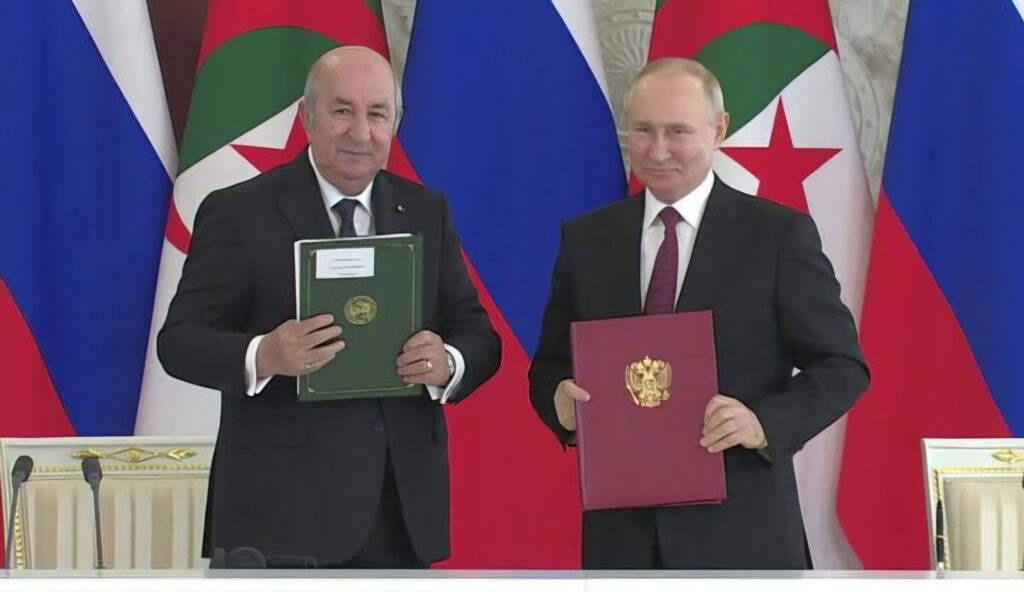
Algeria now wants to use its import demand to attract investment inside the country. During the 13th session of the Algerian-Russian Intergovernmental Joint Commission in Moscow, Russian Ambassador to Algeria Alexey Solomatin said Russia was no longer seeking only to sell raw products and fertilizers. Moscow is also proposing direct investment through joint ventures and targeted technology transfers, Just Info DZ reported.
This approach corresponds with Algeria’s plans to develop extensive agricultural areas in the south and reduce its import bill. The source did not identify individual companies, investment amounts, production capacities or firm project timetables. The next phase will consequently depend on whether the two governments and private investors convert the proposals into financed operations with defined outputs.
Trade growth raises the stakes for investors
For Algeria, local projects could add production capacity and technical expertise while preserving access to imported grain. For Russian suppliers, investment could create a longer-term position that extends beyond seasonal commodity sales. Joint ventures could also connect equipment, inputs and production knowledge with Algeria’s land-development priorities, although the precise sectors have not yet been disclosed.
The reported increase of more than 40% shows that the bilateral agricultural channel is already expanding rapidly. Its durability will be measured not only by wheat volumes, but by whether investment and technology commitments materialize without weakening competition among Algeria’s suppliers. Until concrete projects are announced, grain trade—and wheat in particular—will remain the measurable foundation of the relationship.