Algeria’s Khenchela Forecasts Apple Harvest Near Two Million Quintals
Algeria’s Khenchela province expects an apple harvest approaching two million quintals in the 2025/2026 agricultural season, about 300,000 quintals below the previous season after spring hail. New market infrastructure, intensive orchards and international partnerships are supporting the region’s production and export ambitions.
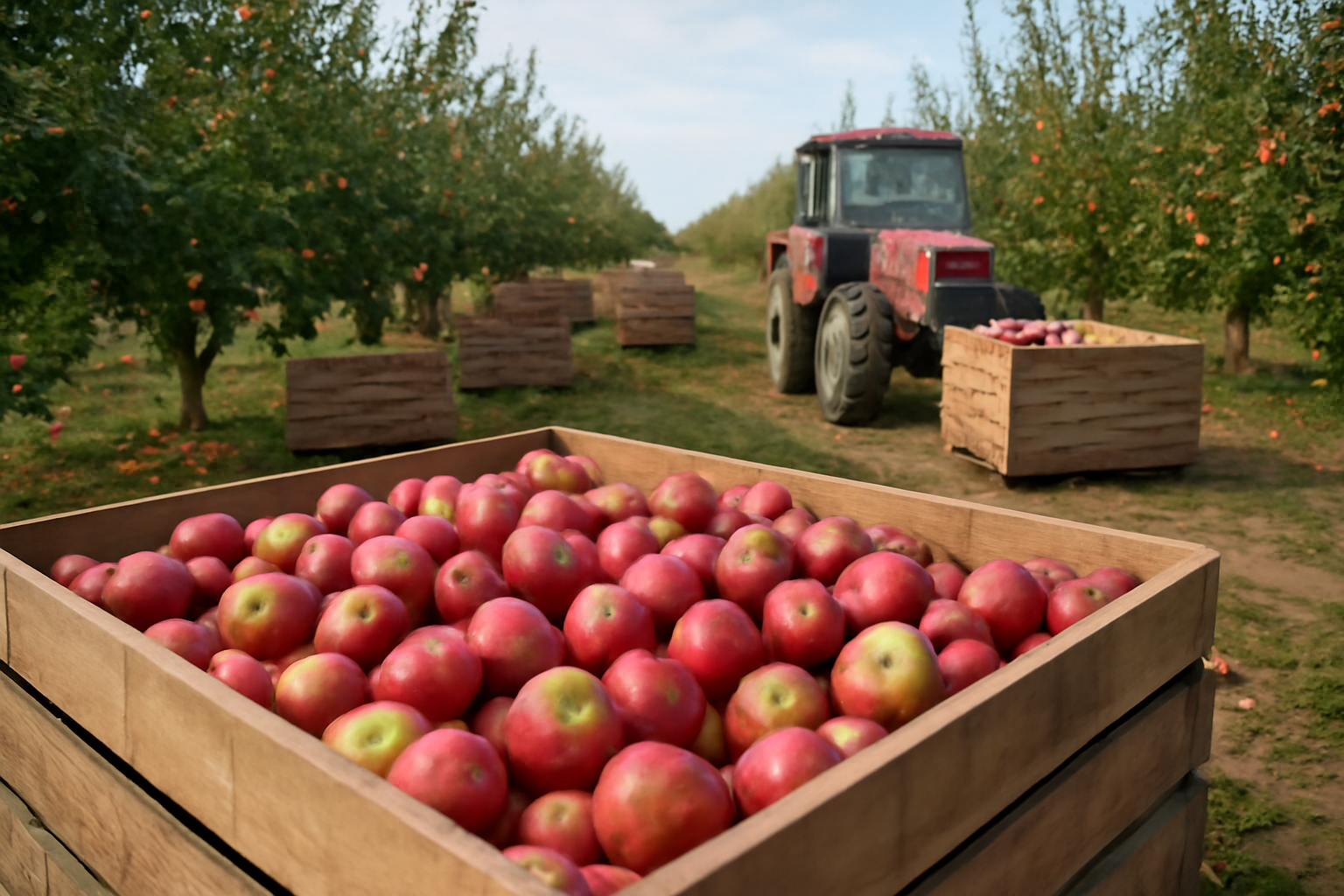
Harvest forecast slips after spring hail
Algeria’s eastern province of Khenchela is forecasting an apple harvest approaching two million quintals for the 2025/2026 agricultural season, reinforcing its position as the country’s leading apple-producing region. According to just-infodz.com, the estimate from the provincial Directorate of Agricultural Services is around 300,000 quintals below the previous season because of spring hail episodes.
The projected crop comes from a fruit-growing area of 9,000 hectares, of which more than 5,000 hectares are currently in full production. Orchard acreage continues to expand in producing municipalities including Bouhmama, Taouzient, Chelia, Yabous, El M’sara and El Hamma, supported by public investment and private-sector participation.
Harvesting runs from July through the end of October. The extended calendar helps spread deliveries to distribution channels and storage facilities rather than concentrating the entire crop within a short marketing window. This is particularly important for a crop of the expected scale, although the sector still faces structural constraints as it seeks to secure further growth.
Covered market strengthens local distribution
A central element of Khenchela’s commercialization strategy is the covered apple market inaugurated in Bouhmama. Just-infodz.com reports that the complex covers 86,000 square metres and was financed through Algeria’s 2021 supplementary presidential program. It is intended to serve as a commercial hub for growers and buyers in the province.
Public companies are also intervening in the supply chain as the government seeks to limit commercial speculation, protect consumers’ purchasing power and maintain fair returns for producers. SARPA and FRIGOMEDIT purchase apples directly at the farm level and transport them free of charge to wholesale markets, according to the publication. The arrangement reduces the number of intermediaries between orchards and Algeria’s domestic consumers.
These measures address immediate crop movement, but export development will require reliable handling, storage and logistics alongside consistent product quality. Khenchela’s long harvesting period can support orderly distribution, provided that available infrastructure can absorb deliveries and preserve the fruit for domestic sale or shipment abroad.
High-density orchards target higher yields
Growers are introducing precision agriculture and hyper-intensive planting systems to raise orchard productivity and meet international market requirements. Pilot orchards are being planted at a density of 3,000 trees per hectare. Just-infodz.com says these systems could produce yields of as much as 600 quintals per hectare from the third year.
The modernization program includes a partnership protocol with Poland’s Arno Group. More than 170 local fruit growers are receiving knowledge and technical expertise from European specialists. A separate professional-placement agreement with Abbas Laghrour University of Khenchela is designed to bring young university graduates into modernized farms, connecting orchard investment with local technical training.
The initiatives could help growers improve productivity and standardize cultivation practices, both of which are important for serving demanding markets. However, the current season’s hail-related decline also underlines the sector’s exposure to weather risks. Higher planting density can increase output potential, but stable commercialization still depends on crop protection, post-harvest management and dependable routes to buyers.
Export office planned as overseas interest grows
Khenchela’s apple industry is seeking a larger role beyond Algeria’s domestic market. According to just-infodz.com, buyers in Europe, Africa and Gulf markets have shown strong interest in the province’s apples, based on their taste and compliance with phytosanitary requirements. The source does not provide confirmed export volumes, destinations or sales contracts.
A dedicated export office is expected to be created to streamline logistical and administrative procedures. The objective is to position Algerian apples more firmly in Mediterranean trade, but success will depend on converting buyer interest into repeat shipments while meeting destination-market rules.
For Khenchela, the near-term task is therefore twofold: moving a crop close to two million quintals efficiently through domestic channels and building the systems needed for external sales. The Bouhmama market, direct public purchasing, intensive orchards and technical cooperation provide a production and commercialization base. Export ambitions will ultimately be tested by consistency, storage capacity, logistics and market access.