Algeria’s industrial tomato harvest reaches 642,262.50 quintals
Algeria has harvested 642,262.50 quintals of industrial tomatoes from 742.50 hectares, El Moudjahid reported. The average yield of 865 quintals per hectare points to strong raw-material availability for processors, although the available figures do not specify the final harvest forecast or processing capacity.
Harvest exceeds 642,000 quintals
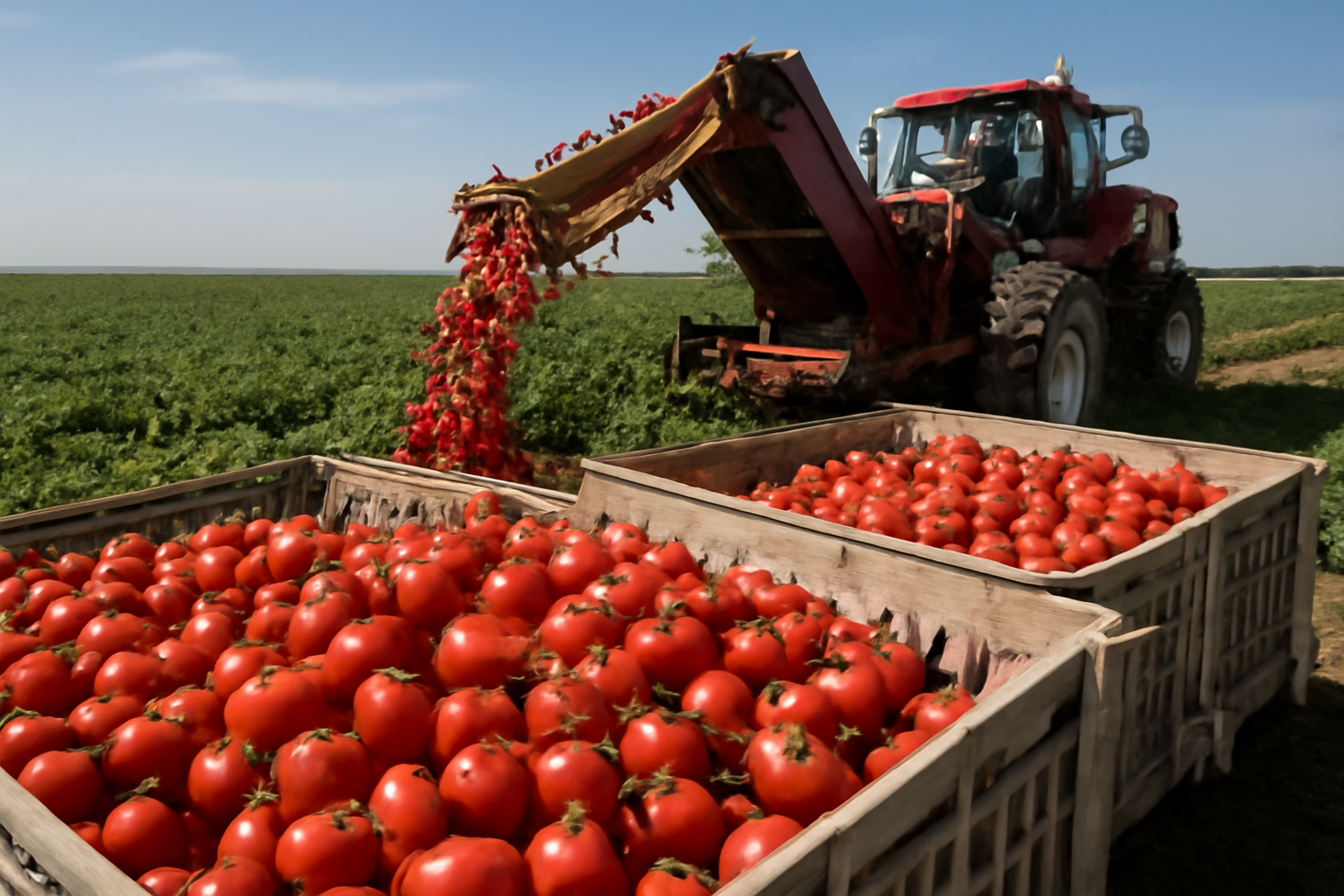
Algeria’s industrial tomato campaign is producing an unusually strong harvest, with 642,262.50 quintals collected so far, according to statistics reported by El Moudjahid. The crop was harvested from 742.50 hectares, while the average yield reached 865 quintals per hectare.
The figures are equivalent to 64,226.25 tonnes of tomatoes intended for processing. They indicate that the campaign has already generated a substantial volume of raw material from a comparatively concentrated cultivated area. The report describes the expected harvest as exceptional, although it does not provide a final production forecast, a comparison with the previous season or a date for completion of harvesting.
High yield raises the importance of processing capacity
An average yield of 865 quintals, or 86.5 tonnes, per hectare is the central operational figure for growers and processors. Strong field productivity can reduce the amount of land required to supply factories, but the commercial result also depends on whether harvesting, transport and processing lines can absorb tomatoes at the pace at which they mature.
Industrial tomatoes are perishable and must generally move quickly from farms to processing facilities. The reported volume therefore creates an immediate requirement for coordinated collection and factory intake. If plants can handle the crop without extended waiting times, processors should have more domestic raw material available for products such as tomato paste, purée and other preserved tomato preparations.
The source material does not state how much processing capacity is operating during the campaign, where the harvested area is located or how production is divided among processors. It also provides no information on farm-gate prices, procurement contracts, processing yields or inventories. Those variables will determine whether the high agricultural yield translates into stronger factory output and improved margins across the supply chain.
Domestic supply implications
For Algeria’s food-processing sector, a crop of 642,262.50 quintals collected to date could support domestic availability of processed tomato products. Greater local raw-material supply may reduce pressure on processors to source tomato inputs elsewhere, but the data supplied do not quantify Algeria’s current imports, exports or consumption. It is therefore not possible to calculate any change in import requirements from the harvest figures alone.
The distinction between field production and finished-product supply remains important. The amount of paste or other processed goods ultimately produced will depend on tomato quality, solids content, factory recovery rates and losses during transport and processing. None of these indicators appears in the available report.
Market attention shifts to final volumes
Industry participants will now need the final harvested area and production total to assess the full scale of the campaign. Processor intake volumes, utilization rates and finished-product stocks would provide a clearer measure of the crop’s effect on domestic supply.
For growers, the reported yield is a positive production signal. For processors, it represents both an opportunity to secure more locally grown tomatoes and a test of collection, logistics and plant throughput. Until final production and factory data are published, the clearest conclusion is that Algeria has achieved high field productivity and already collected more than 64,000 tonnes of industrial tomatoes from 742.50 hectares.