Algeria's Biskra forecasts record date crop of 4.1 million quintals for 2026-2027
Agricultural services in the Algerian wilaya of Biskra expect date output to exceed 4.1 million quintals in the 2026-2027 season, roughly 410,000 tonnes and about 100,000 quintals more than the previous campaign. Deglet Nour alone is forecast at 2.6 million quintals, close to 60% of the total, with picking due to start in mid-October. The record crop arrives while regional cold stores still hold unsold volumes from last season.
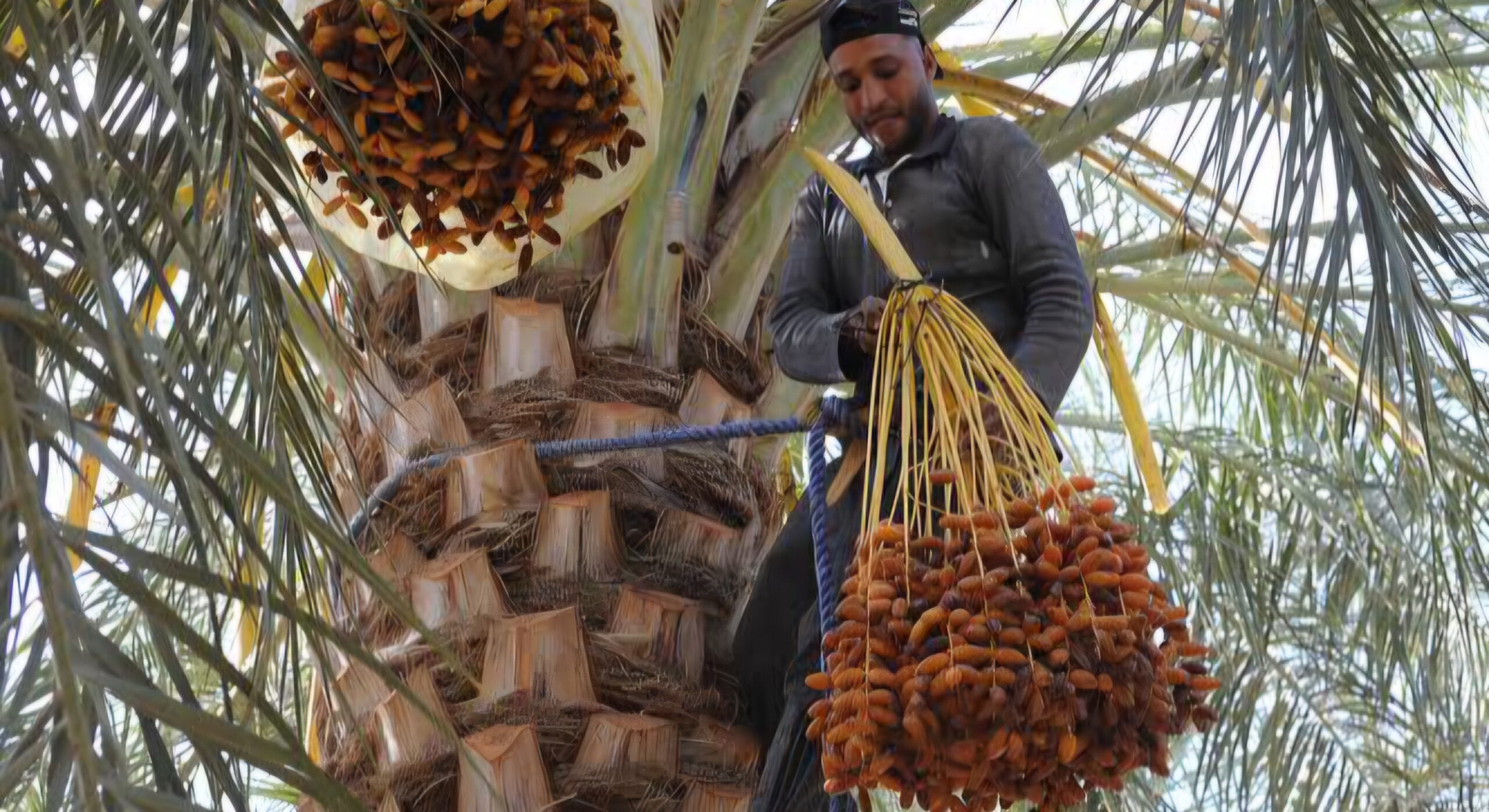
Biskra forecasts more than 4.1 million quintals
Agricultural services in the Algerian wilaya of Biskra expect date production to exceed 4.1 million quintals in the 2026-2027 season, according to the Algerian outlet just-infodz.com. With a quintal equal to 100 kilograms, the forecast corresponds to roughly 410,000 tonnes across all varieties. Biskra is Algeria's leading date-producing wilaya and the commercial centre of the Ziban region, and the projection would confirm its position as the country's largest producer by volume.
The forecast is about 100,000 quintals — some 10,000 tonnes — above the previous season. Harvesting of early varieties has already begun in several parts of the region, and the peak of the campaign is expected over the coming weeks. The report describes the season as a record for the wilaya and attributes the increase to sustained expansion of the sector rather than to a single favourable year.
Deglet Nour accounts for close to 60% of the crop
Deglet Nour, the variety that anchors Algeria's date exports, is forecast at 2.6 million quintals, about 260,000 tonnes, or close to 60% of Biskra's total output. Picking of the variety is due to begin in mid-October, the point at which the bulk of the season's commercially traded volume enters the supply chain. Known for its translucent texture and honeyed taste, Deglet Nour remains the main driver of the date economy in the Ziban region and the principal carrier of Algeria's presence on international date markets.
Alongside it, the wilaya grows varieties that mature ahead of Deglet Nour and are sold on both local and international markets, among them Ghars and Mech Degla. The season's headline figures break down as follows:
- Total output, all varieties: more than 4.1 million quintals, up about 100,000 quintals year on year
- Deglet Nour: 2.6 million quintals, close to 60% of the total, harvest from mid-October
- Ghars and Mech Degla: early-maturing varieties, already being picked, sold on domestic and export markets
Investment in the palm groves behind the increase
Lahbib Bousri, director of agricultural services for Biskra, told the Algerian press agency APS that the rise in volumes is the direct result of investment made in recent years in renewing and modernising the sector. The wilaya's palm stock is estimated at close to four million date palms, a base that has expanded steadily as replanting programmes have come into production.
That planted base is the reason output has continued to grow from season to season rather than fluctuating with weather alone. For processors and packers operating in the Ziban region, it also means the volume arriving at grading and packing lines in October rises each year, independently of how much of the previous crop has been sold.
Storage carryover and the export question
The arrival of a record harvest coincides with a carryover from the previous campaign. Several cold stores in the region have not yet been fully emptied by growers, raising the prospect of saturated storage capacity just as the new crop comes in. Cold-chain availability is a recurring constraint in the Algerian date sector, and it becomes binding in the weeks when the Deglet Nour harvest peaks.
The report presents exports as the most viable route to absorb rising volumes without flooding the domestic market or blocking refrigerated infrastructure. Deeper penetration of foreign markets, combined with marketing built around Algerian origin, is described as a way both to move stocks and to generate foreign currency for the national economy. On that reading, the issue for the 2026-2027 season is less agronomic than commercial and logistical: converting a large local crop into international sales before storage capacity runs out.