Alcohol-Free Beer Passes 6% of Global Beer Revenue as Younger Drinkers Cut Back
Alcohol-free beer now accounts for just over 6% of world beer revenue and has grown 6% to 17% a year over the past five years, with Statista Market Insights projecting $49 billion in global sales by 2030. EU output of the category reached 2.1 billion litres in 2025 even as total beer production fell 0.7%. Germany leads production, Spain leads consumption, and younger drinkers in the US and South Korea are driving the shift.
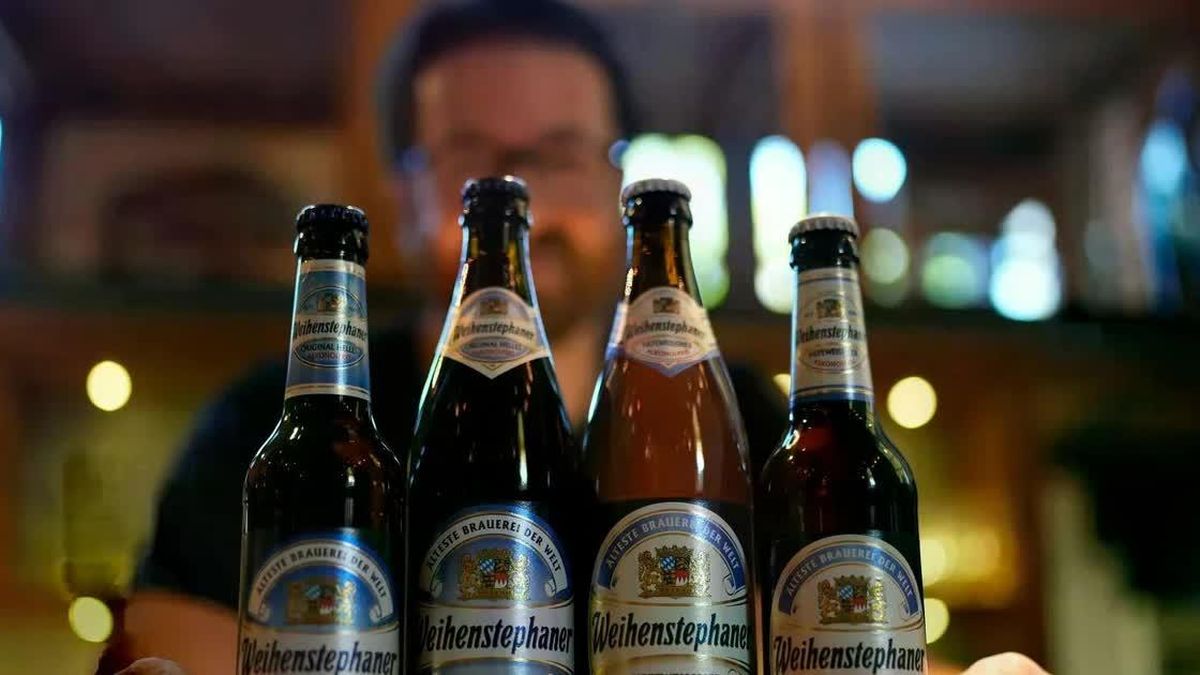
Non-alcoholic beer has shifted from a marginal product line to one of the few growth engines in a global beer market facing weak demand. The segment accounts for just over 6% of world beer revenue, yet it has expanded between 6% and 17% a year over the past five years. Statista Market Insights projects that global sales of alcohol-free beer will reach $49 billion by 2030, close to double the 2021 figure.
The pattern points to a change in how people drink rather than how often they go out. Demand for social occasions has held steady, while the volume of alcohol consumed at them is falling.
Europe: falling output, rising zero-alcohol share
Eurostat data show total beer production across the European Union reached 34.4 billion litres in 2025, down 0.7% from the previous year. Output of alcohol-free beer and beer below 0.5% ABV came to 2.1 billion litres, more than 6% of the bloc's total production.
Germany is the EU's largest producer of alcohol-free beer, while Spain leads the bloc in consumption. Cerveceros de España reported that Spanish alcohol-free beer sales rose 4.6% in 2025 to a record 330 million litres, equivalent to 14% of all beer consumed in the country — more than twice the segment's share of EU production.
In the United Kingdom, a survey cited by The Drinks Business found that 60% of consumers now consider the quality of alcohol-free beer equal to that of conventional beer. At Craft Locals, an independent pub group, alcohol-free beer accounts for 4.6% of total drinks revenue. "Customers are actively asking for this line," said chief executive Mitch Adams. "We make sure every site has a proper alcohol-free option rather than a token one."
Technology closed the taste gap
Production technology is the main reason quality has converged. Brewers have moved beyond simply heating the alcohol out of finished beer, and three techniques account for most of the improvement:
- Specialised yeast strains that limit alcohol formation during fermentation
- Reverse osmosis, which separates alcohol from the finished beer
- Vacuum distillation, which strips alcohol at low temperature
Together these methods have removed the raw grain notes that once defined the category while retaining the characteristic flavour of beer. "Breweries are forced to focus more on alcohol-free beer as sales of alcoholic beer decline in many markets," said beer taster Anikó Lehtinen. "The range now gets better shelf space in supermarkets, and even restaurants are actively putting several alcohol-free beers on the menu instead of offering a single token choice."
Younger drinkers set the pace
The strongest signal comes from younger consumers. Retail sales of alcohol-free beer in the United States have reached $583 million, and 51% of people aged 18 to 25 regularly drink no- or low-alcohol products.
Asia shows a similar shift. Data cited by The Korea Times indicate that South Koreans in their twenties now consume an average of 64.8 grams of alcohol per day, below the 66.8 grams recorded for those in their sixties. The share of 19- to 29-year-olds who drink no alcohol at all or choose alcohol-free beer has reached a record 56%. The change has pushed large brewers including Heineken to restructure their portfolios towards zero-alcohol, sugar-free and low-calorie lines.
Nutrition claims and labelling risk
Nutritional positioning is becoming part of the pitch. A study published in the Journal of Agricultural and Food Chemistry analysed 65 beers and found that a standard can of lager supplies 20% of the recommended daily intake of vitamin B6, while the alcohol-free version supplies close to 59%. Alcohol-free products also contain significantly fewer calories.
Health specialists caution against treating the category as a nutritional supplement. Sonya Angelone, a dietitian based in San Francisco, noted that these drinks still lack core nutrients such as protein and fibre. Testing has also found that roughly 30% of alcohol-free beers on the market contain more alcohol than their labels declare — a material risk for pregnant women, people with liver disease and anyone who must avoid alcohol entirely.
Full market analysis