AI and satellite data lift Kyrgyz corn and sunflower yields by 33%
A pilot project in the village of Ak-Say, Ton district, raised corn and sunflower yields by 33% using satellite monitoring and artificial intelligence, Akchabar reported. The field was irrigated twice and used no additional water. The project, run with the Kyrgyz National University and the Kyrgyzstan Satellite project, may be extended to other districts.
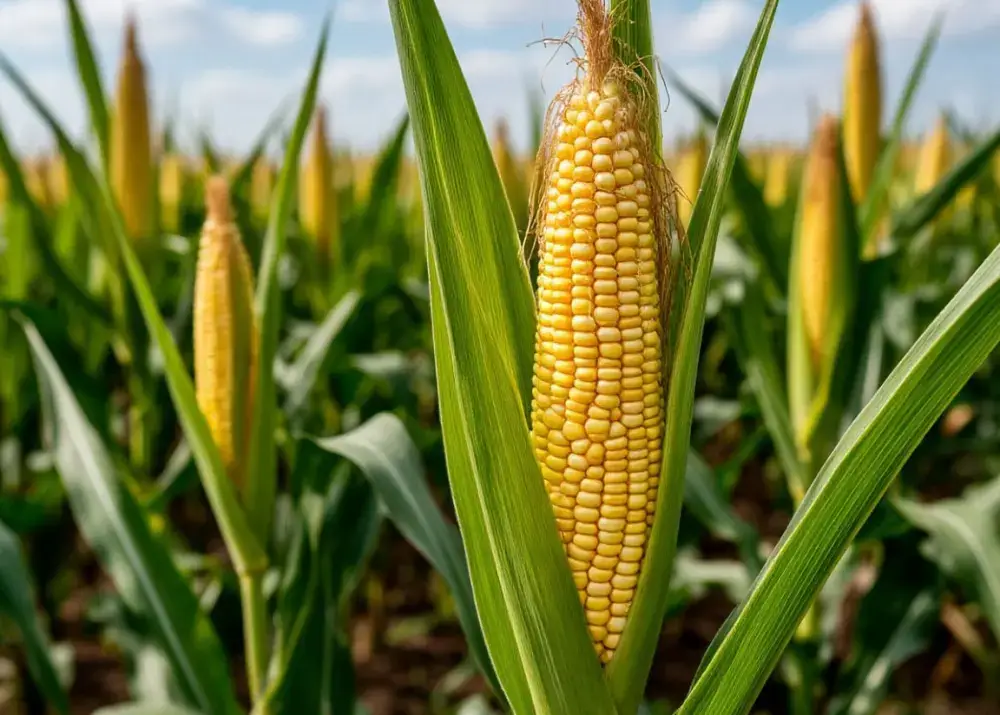
A pilot project in the village of Ak-Say, in the Ton district of Kyrgyzstan, has increased corn and sunflower yields by 33% using satellite data and artificial intelligence, the Kyrgyz business outlet Akchabar reported. The result was achieved without raising the volume of irrigation water applied to the plot.
The project is being carried out jointly with the Kyrgyz National University and the Kyrgyzstan Satellite project. Specialists monitor the condition of the fields and analyse the factors that affect plant growth and development, according to Akchabar.
Variety selection based on climate matching
Artificial intelligence was used to study areas of the Issyk-Kul region with similar climatic conditions. On the basis of those data, the project identified corn and sunflower varieties that deliver good yields in comparable environments. Seeds for the pilot field were then selected with local conditions in mind and with attention to the efficient use of irrigation water.
That is the core of the method as described. Instead of changing the input package, the project changed what went into the ground, using observations from climatically analogous zones as the selection criterion. The seed choice was an output of the data layer rather than of local practice.
Two irrigations and an intercropped field
At Ak-Say the seeds were sown without any increase in water use. The field was watered twice over the season, and corn and sunflower were grown together on the same plot. According to project data cited by Akchabar, yields on the pilot plot rose by 33%.
The water figure carries as much weight as the yield figure. Irrigation is the binding constraint across much of Kyrgyz arable land, and a yield gain delivered on a constant water budget means a higher return per cubic metre reaching the field. Satellite technology and artificial intelligence make it possible to track the state of the crops, detect problems in time and use irrigation water more rationally, the report notes.
What the published account leaves open
The report does not state the baseline yield against which the 33% increase is measured, the size of the pilot plot, the varieties selected, the sowing and harvest dates, or the cost of the satellite and analytics component. It also does not give the split between corn and sunflower in the combined harvest. For producers, seed suppliers and investors assessing replication, those are the numbers that determine whether the approach pays for itself.
A single field over a single season cannot separate the contribution of the technology from that of the growing conditions in that season. The intercropping of corn and sunflower is a second variable running alongside the variety choice and the satellite monitoring, and the published material does not attribute the gain between them. Multi-season data across several plots would be needed before the 33% figure can be treated as a repeatable result rather than a first observation.
The scaling question
Following the results, the project is considering extending the experience to other districts of the country and a broader introduction of digital technologies into agriculture, Akchabar reported.
The most transferable asset from Ak-Say is the analytical layer rather than the field itself. A dataset that maps climatic analogues within the Issyk-Kul region and links them to variety performance is built once and can be queried for any plot with comparable conditions, and the marginal cost of adding a field to a satellite monitoring service is far lower than the cost of building the service. What does not scale automatically is everything downstream: commercial availability of the selected seed, agronomic staff able to act on the alerts, and irrigation infrastructure capable of delivering water on the schedule the models recommend. On one pilot plot the Kyrgyz National University and the Kyrgyzstan Satellite project supplied that capacity directly. Across a district, or across the country, it has to come from the farms themselves.
Corn and sunflower sit at the base of the domestic feed and vegetable oil chains, which makes yield per hectare and yield per cubic metre of water immediately relevant to processors and to importers of both products. Akchabar did not report volumes, prices or any trade effect from the pilot.