AI compute boom strains steel, copper and skilled-labour supply chains
Rising demand for AI computing power is colliding with a slow-moving industrial supply chain for specialty steel, copper and qualified labour, Italy's Linkiesta reports. Long equipment lead times add to the strain. The bottleneck raises the risk of delays to data-centre construction.
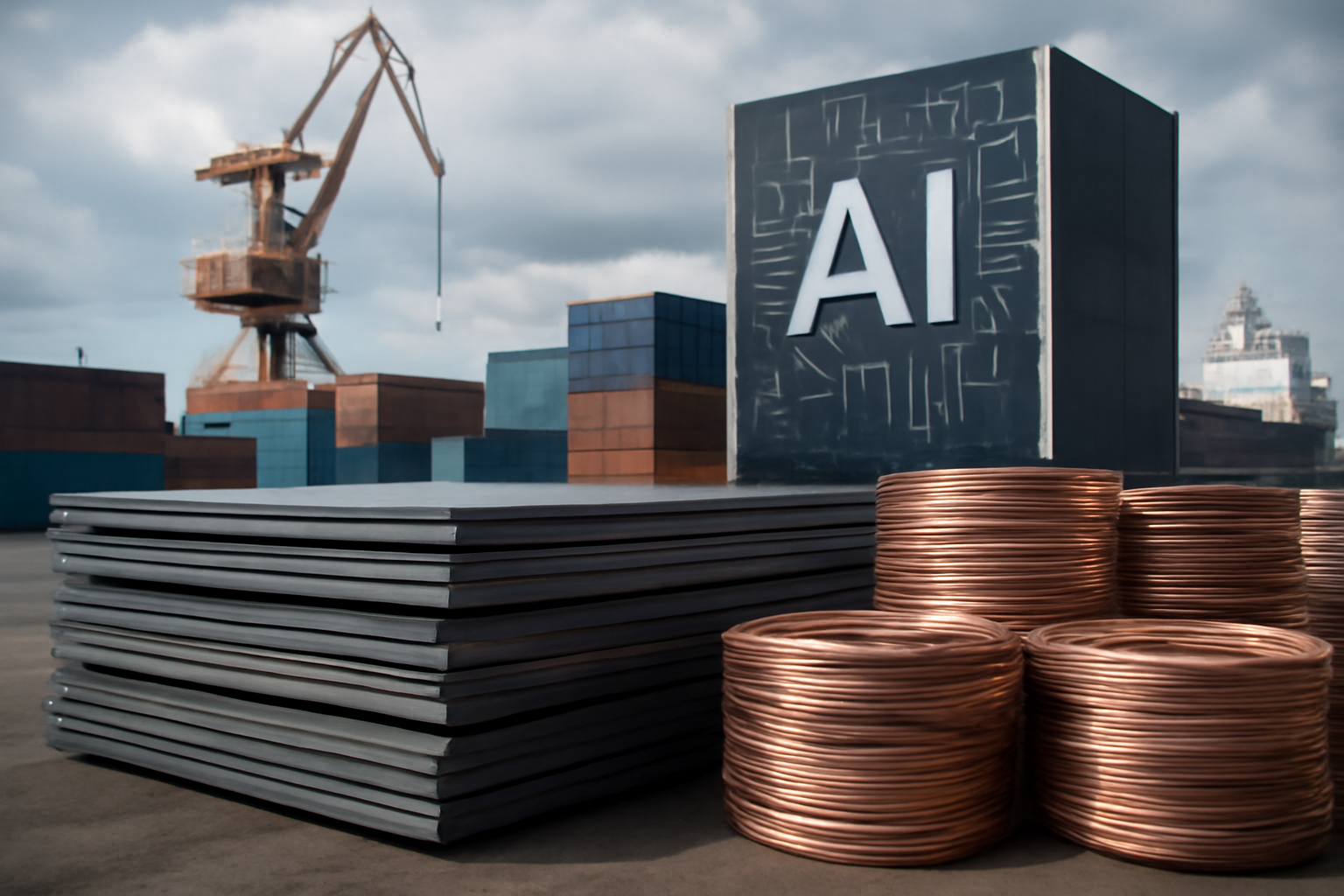
AI compute boom meets a supply chain that cannot scale quickly
The rapid expansion of computing capacity, driven by artificial intelligence, is colliding with an industrial supply chain that grows slowly and is difficult to expand, according to the Italian outlet Linkiesta. The binding constraint increasingly sits not in the semiconductors themselves but in the physical materials and the skilled workforce needed to build, wire and power the data centres that house them. As demand for AI processing rises, the question shifts from how many chips can be produced to whether the surrounding industrial base can deliver the buildings, metal and manpower fast enough.
Linkiesta reports that the data-centre build-out depends on specialty steel, copper and qualified labour, together with equipment whose delivery times have lengthened. These inputs come from mature, capital-intensive industries that cannot raise output at short notice. That imbalance leaves the pace of construction dictated by supply rather than by demand, an unusual position for a technology sector accustomed to scaling quickly.
Specialty steel and copper in the critical path
Specialty steel and copper are identified as core materials for the build-out. Both are internationally traded commodities already claimed by construction, electrical grids and the energy transition, and data-centre demand now adds a large new buyer competing for the same tonnage. Copper is central to electrical distribution and cabling, while specialty steel serves structural and equipment needs. For metal exporters, the trend signals a durable additional source of demand; for importers, developers and contractors, it points to tighter availability and firmer input costs across the build cycle.
Skilled labour and longer lead times
Beyond raw materials, Linkiesta highlights a shortage of qualified labour and delivery times that have stretched. Constructing and energising a data centre relies on specialised trades that cannot be trained quickly, and a limited pool of qualified workers becomes a hard ceiling on how many projects can proceed in parallel. At the same time, longer lead times on heavy equipment widen the gap between a project decision and an operational site, adding months to schedules that developers had assumed would move faster.
The risk: delayed data-centre construction
The combined effect, according to Linkiesta, is a rising risk of delays to data-centre construction. Compute demand can be committed far faster than the underlying sites can be built and powered, and that mismatch is more likely to surface as postponed capacity than as cancelled projects. For trade in steel, copper and related equipment, the implication is a sustained pull from the technology sector, layered on top of existing industrial and energy demand, that keeps pressure on suppliers and on the workers who install the finished systems.