AI chip demand pushes semiconductor equipment makers to raise 2026 forecasts
Aixtron and ASML raised their 2026 outlooks in April as AI-driven demand accelerated spending on advanced chipmaking tools. EUV lithography lead times already exceed 12 months, with some slots booked into 2027, while silicon carbide and gallium nitride tools face tightening supply.
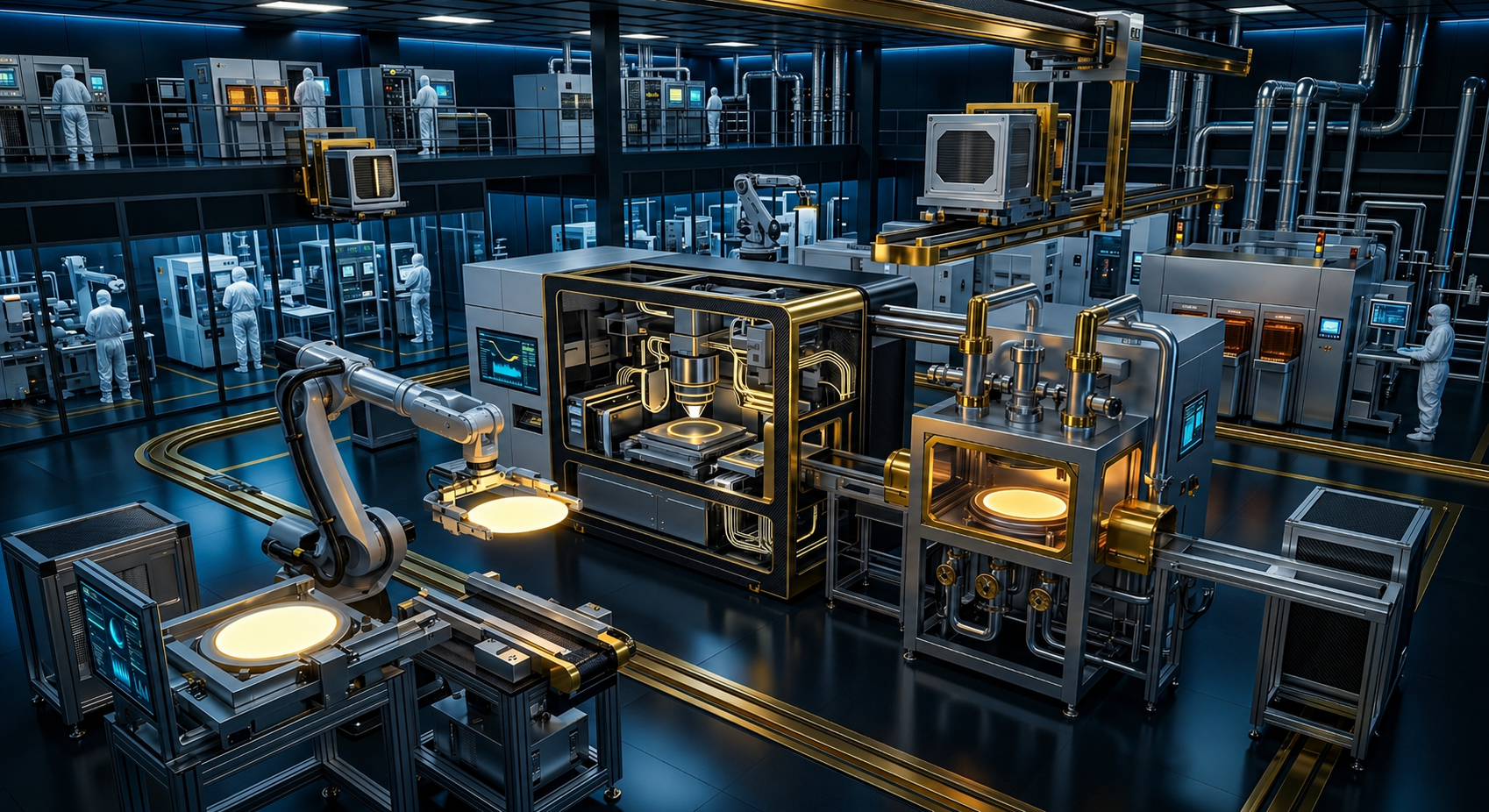
AI demand lifts 2026 chip equipment forecasts
Semiconductor equipment suppliers are raising their 2026 forecasts as demand from artificial intelligence accelerates capital spending on advanced chipmaking tools, according to a report by Astute Group. Germany-based Aixtron and Netherlands-based ASML both reported stronger order pipelines in April. Reuters reported that Aixtron increased its 2026 revenue outlook on demand for compound semiconductor tools, while the Wall Street Journal reported that ASML lifted its guidance on the back of AI-related chip investment.
ASML said orders rose for extreme ultraviolet (EUV) lithography systems, the machines required for sub-5nm node production, and described AI as "the primary growth driver in advanced logic." Industry association SEMI said global semiconductor equipment spending is expected to stay elevated through 2026, noting that "AI applications are accelerating fab expansions worldwide" as foundries prioritise leading-edge nodes and advanced packaging.
Lead times stretch toward 2027
The demand surge is reshaping how capacity is allocated. EUV systems already carry lead times exceeding 12 months, and some customers have secured delivery slots well into 2027, according to Astute Group. Deposition and epitaxy tools, including Aixtron's systems for silicon carbide (SiC) wafers, are also facing extended delivery schedules.
Aixtron said its order intake was "driven by silicon carbide and gallium nitride applications" — wide-bandgap materials used in electric vehicles and power conversion. These materials require specialised deposition equipment supplied by fewer vendors than traditional silicon processes, tightening availability as electrification demand grows.
Supply constraints push prices higher
The narrow supplier base is straining capacity. Lead times for SiC-related tools have lengthened, with some manufacturers reporting constraints in reactor capacity and precursor materials. Equipment costs for advanced nodes and compound semiconductor production have risen, driven by both demand and component shortages within the tool supply chain. ASML warned that supply chain constraints remain a limiting factor, noting that "component shortages still affect output" despite efforts to add capacity.
Foundries expanding AI-related capacity are revising construction timelines to match tool availability, particularly for lithography and advanced deposition systems.
Packaging emerges as the next bottleneck
SEMI data indicates that back-end processes, including advanced packaging, are becoming a bottleneck, with investment shifting toward heterogeneous integration technologies that support AI chip architectures. Suppliers are expanding production, but the additions are unlikely to fully offset near-term constraints. Astute Group said procurement strategies are adjusting, with longer planning cycles and earlier tool reservations becoming standard practice. Pricing volatility and extended lead times are likely to persist through 2026 while demand stays concentrated in high-performance computing and electrification.