Africa turns to rice research and innovation as consumption outpaces production
Africa is looking to research and innovation to narrow a rice supply deficit as consumption grows faster than production. The imbalance reinforces the continent’s dependence on foreign supplies and its exposure to developments in the international rice market.
Rice demand moves ahead of local supply
Africa is placing greater emphasis on research and innovation to address a widening imbalance in its rice market. According to Agence Ecofin, rice consumption on the continent is growing faster than production, leaving domestic supply unable to keep pace with demand.
The gap has made Africa the world’s second-largest rice-importing region after Asia, Agence Ecofin reports. That position gives the continent an important role in the international rice market while exposing buyers to changes in availability beyond Africa. Importers, distributors and processors must bridge the difference between what African farms produce and what consumers require.
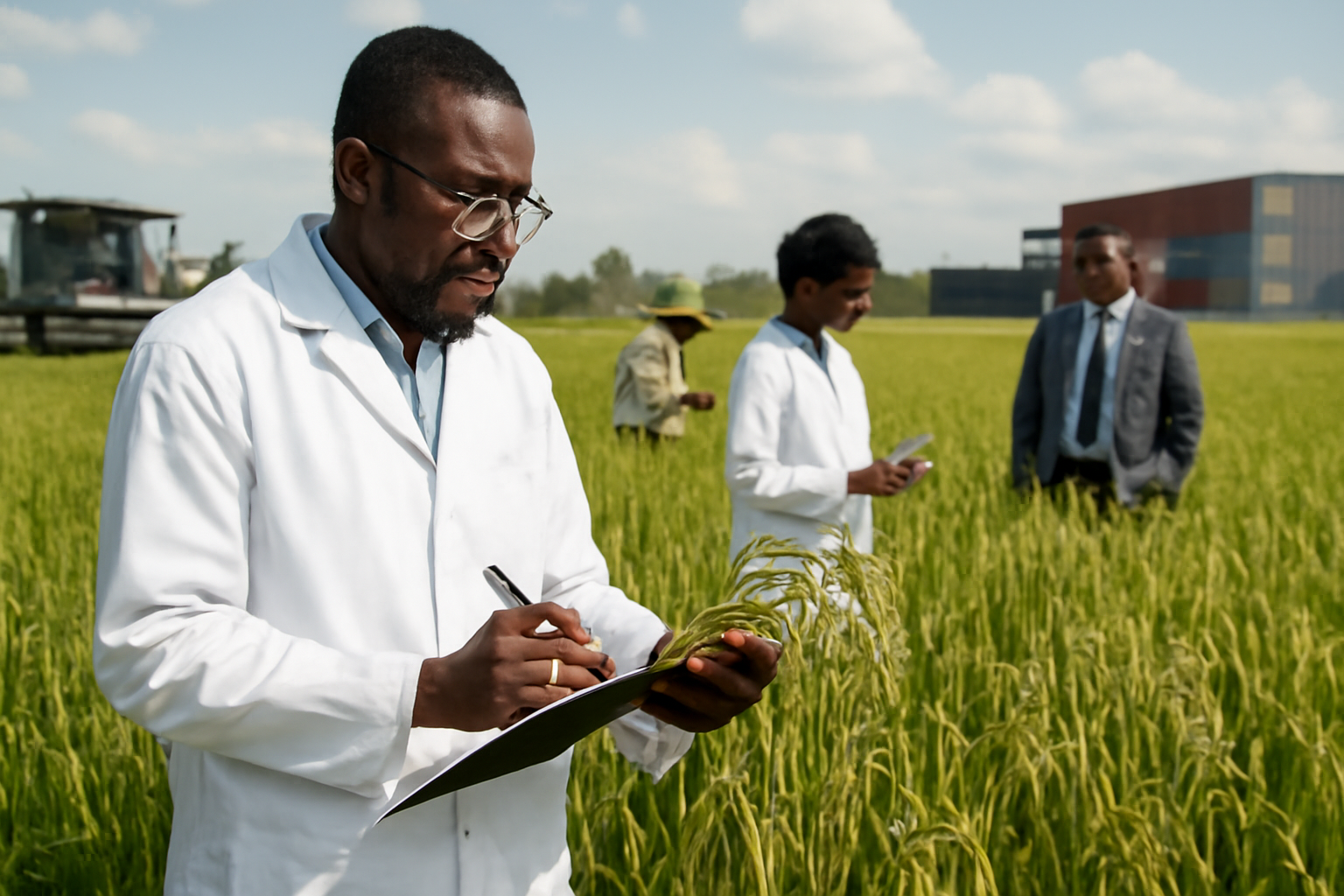
The challenge is not simply to expand planted area. Research can support the development and adoption of rice varieties suited to local growing conditions, while innovation can improve cultivation, harvesting, storage and processing. Progress across these stages would determine how much additional farm output ultimately reaches consumers as marketable rice.
Research moves closer to commercial priorities
A research-led response must connect scientific work with the practical needs of producers. Farmers need technologies they can use under local conditions, while processors need reliable volumes and consistent quality. Traders and distributors also require predictable supply if locally produced rice is to compete effectively in established markets.
This makes the transfer of knowledge from research institutions to farms and processing businesses central to the strategy. A successful variety or production technique has limited market impact unless growers can access it and use it economically. The same applies to improvements after harvest: innovation must translate into rice that can be stored, milled and delivered in forms accepted by buyers.
For investors, the production deficit points to opportunities across the value chain rather than in farming alone. Seed development, agricultural services, storage, milling and market information can all influence the quantity and quality of domestic rice available for sale. The commercial test will be whether these investments make local supply more dependable for processors and consumers.
Imports remain part of the market equation
Research and innovation are long-term tools, whereas the supply gap is already present. Africa will therefore continue to need imported rice while efforts to raise production and improve value chains take effect. Importers remain essential to market availability, even as governments, researchers and producers seek to increase the contribution of domestic crops.
The balance between imported and locally produced rice will depend on whether productivity gains can keep pace with consumption. If production continues to grow more slowly than demand, additional output may reduce the rate at which dependence increases without eliminating the deficit. For producers, the opportunity is a large and expanding home market; for traders, the persistent gap preserves a role for international supply.
Africa’s research push is therefore both an agricultural and a market strategy. Its outcome will be measured not only by scientific advances, but by the volume of competitive rice reaching processors, distributors and consumers. Until that happens at sufficient scale, the continent’s status as a major importing region will remain a defining feature of the sector.