Africa’s rice imports forecast at 20.055 million tonnes in 2026/27
Africa is forecast to import 20.055 million tonnes of rice in 2026/27, equivalent to about 42.2% of continental consumption. Nigeria leads the major African importers, while supplier prices and national tariff policies remain critical variables.
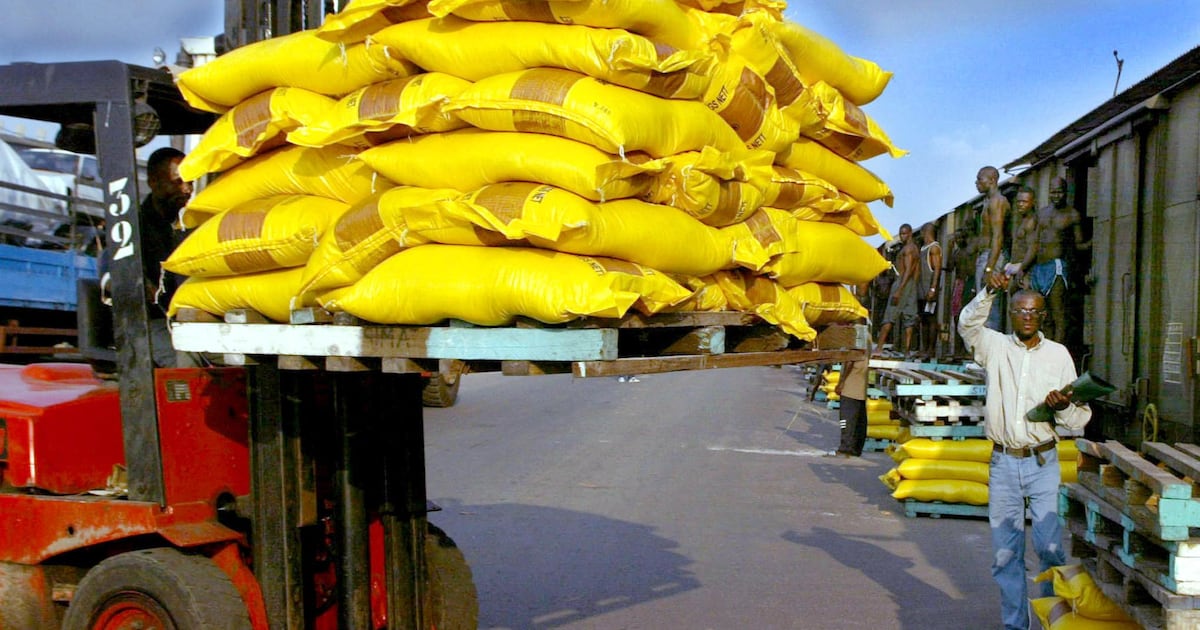
Africa faces a 20-million-tonne import requirement
Africa is forecast to import 20.055 million tonnes of rice in the 2026/27 marketing year, according to figures from the US Department of Agriculture’s Foreign Agricultural Service reported by Le360 Afrique. That volume would represent about 42.2% of the continent’s projected consumption of 47.537 million tonnes. For rice, the USDA’s 2026/27 trade year corresponds to calendar year 2027, making the estimates published on August 12, 2026 forward-looking forecasts.
The imbalance is concentrated in sub-Saharan Africa, where consumption is projected at 42.727 million tonnes against production of 23.477 million tonnes. Imports are forecast at 19.275 million tonnes, meaning foreign supplies would cover nearly 45% of consumption. Closing stocks of 4.272 million tonnes equal only about 10% of annual demand, leaving importing markets exposed to disruptions in supply, shipping and supplier policy.
North Africa has a smaller deficit. The region is forecast to consume 4.810 million tonnes, produce 4.55 million tonnes and import 780,000 tonnes, with closing stocks of 461,000 tonnes. Its import-to-consumption ratio is about 16%. In Morocco, where rice is less central to diets than wheat or couscous, the National Interprofessional Rice Federation says domestic production covers about 75% of demand.
Ten markets account for major purchasing volumes
Nigeria remains the largest listed African importer, with purchases forecast at 2.9 million tonnes in both 2025/26 and 2026/27, up from 2 million tonnes in 2022/23. Côte d’Ivoire follows at 1.7 million tonnes in 2026/27, down from 1.8 million tonnes, while Senegal is expected to import 1.4 million tonnes.
South Africa is forecast to maintain imports of 1.25 million tonnes. Guinea’s projection was cut by 100,000 tonnes to 1.1 million tonnes because of weaker purchases of Asian rice. Kenya’s 2025/26 estimate was raised by 200,000 tonnes to 1 million tonnes after the government announced duty-free access for up to 490,000 tonnes, illustrating how tariff decisions can quickly redirect trade.
Mozambique’s imports are projected to decline from 1.05 million tonnes in 2025/26 to 1 million tonnes in 2026/27. Ghana remains at 900,000 tonnes, Madagascar at 850,000 tonnes and Burkina Faso at 800,000 tonnes. Overall sub-Saharan imports are unchanged from 2025/26 but 25% above 2022/23, indicating that the region’s reliance on external supply has persisted.
Asian prices shape landed costs
FOB quotations among major suppliers vary substantially. Indian rice rose by $3 to $358 per tonne, supported by strong interest from Africa and East Asia. Pakistan’s price fell by $19 to $395 per tonne amid weak Middle Eastern sales. Vietnam reached $437 per tonne because of limited supply, while Thailand remained the most expensive of the cited Asian origins at $458 per tonne despite a $16 decline.
India’s comparatively low quotation reinforces its position as a central supplier to African buyers. Higher Vietnamese and Thai prices could increase procurement costs for markets using those origins, while Pakistan offers a cheaper alternative than either country, although the USDA bulletin did not identify large Pakistan-to-Africa flows. Freight costs and delivery terms will determine how much of the FOB difference reaches importers.
China is also becoming more active in African rice markets. Its 2026 export estimate was raised by 200,000 tonnes, from 1.9 million to 2.1 million tonnes, because competitive prices were stimulating African demand. Africa itself remains marginal as an exporter: Egypt is the only African country named among major exporters, with shipments forecast at 200,000 tonnes in 2026/27, less than 0.4% of projected global exports of 62.875 million tonnes.