AfDB approves $18.8 million grant to strengthen Ghana’s rice value chain
The African Development Bank has approved an $18.8 million grant for Ghana’s participation in the REWARD programme. Funding will support climate-resilient farming, irrigation, machinery, processing and market access as Ghana seeks to reduce its reliance on imported rice.
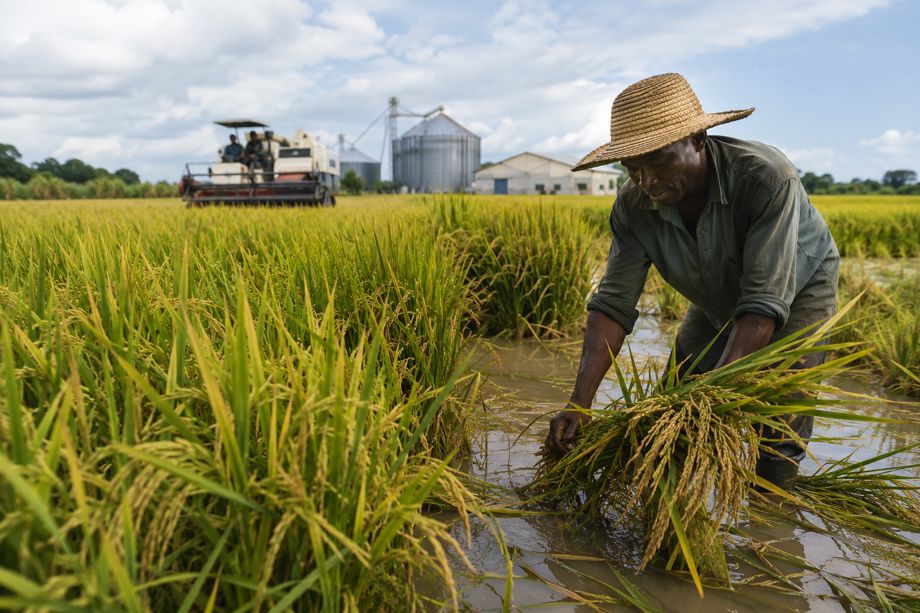
Funding targets the full rice value chain
The African Development Bank Group has approved an $18.8 million grant to the Government of Ghana to strengthen domestic rice production and reduce the country’s exposure to imported grain. The funding will support Ghana’s participation in the Regional West Africa Resilient Rice Value Chains Project, known as REWARD.
According to Devdiscourse, demand for rice in Ghana has risen faster than local production, increasing dependence on foreign supplies and leaving consumers more exposed to changes in global markets. The new programme is designed to address constraints across the value chain rather than focusing exclusively on the amount of land planted or grain harvested.
The grant will finance climate-resilient farming practices, irrigation, land development, modern machinery, quality seed and improved production technologies. It will also support processing, market access and private-sector investment. These downstream measures will be essential if additional paddy production is to become consistently available, marketable rice.
Northern Savannah districts at the centre
Implementation will concentrate on selected districts in Ghana’s Northern Savannah Ecological Zone. The region has considerable agricultural potential, but producers face climate risks, inadequate infrastructure and weak connections to buyers. Irrigation and land development are intended to reduce dependence on unpredictable rainfall, while machinery, seed and production technology could improve farm productivity.
The programme could create opportunities beyond rice farms. Machinery operators, input suppliers, transport companies, storage providers, processors and traders may all benefit if production rises and commercial links become more reliable. However, irrigation systems will require maintenance, machinery must remain accessible and affordable, and farmers will need technical support to use new methods effectively.
Roads, storage sites and mills must also be able to handle larger harvests. If any part of that network remains weak, processors could lack a steady supply of paddy even after farms raise output, while producers could struggle to secure dependable buyers. The REWARD programme therefore combines farm assistance with investment in infrastructure, processing and routes to market.
Processing and logistics will determine competitiveness
Increasing production alone may not displace imported rice, which already moves through established distribution networks and benefits from familiar consumer purchasing patterns. Locally grown grain must compete on price, milling quality, packaging, availability and consistency. Modern processing facilities could improve product quality, but their commercial performance will depend on receiving sufficient and predictable volumes.
Market coordination will be equally important. Farmers need reliable access to processors and buyers, while mills need enough paddy to operate efficiently. Transport and storage capacity will affect delivery times, losses and costs across the chain. Better coordination could make the industry more attractive to private investors, whose capital will be needed after the grant-financed phase.
Commercial results are the key test
AfDB Ghana Country Manager Halima Hashi said the programme would raise productivity, expand market access and support agribusiness development. She also connected climate-resilient investment with food security, employment and more inclusive economic growth. The project supports Ghana’s Feed Ghana Programme and the bank’s priorities for resilient agriculture and private-sector development.
The $18.8 million grant can address infrastructure and production constraints, but lasting import substitution will depend on commercial results. Relevant indicators will include whether irrigation supports reliable cultivation, processing facilities operate effectively, farmers gain access to machinery and technology, and private companies invest in logistics, storage and distribution.
Access for small-scale and less-resourced farmers will also shape the programme’s impact. They may find it harder to obtain machinery, irrigation, finance or commercial buyers. Ghana’s central challenge is therefore not simply to grow more rice, but to connect producers, processors, transporters and markets closely enough to sustain a competitive domestic industry after the initial funding has been spent.