Turkey's First Cotton Harvest Opens in Adana at 40 Lira per Kilogram, 230,000 Tonnes Expected
Picking of Turkey's earliest cotton has begun in the coastal fields of Adana's Karataş district, with the opening farm-gate price set at 40 lira per kilogram. The province is expected to produce about 230,000 tonnes this season after rainfall improved the crop. Planted area in the Çukurova region has fallen to 58,000 dönüm as input costs rise and cotton prices track world levels.
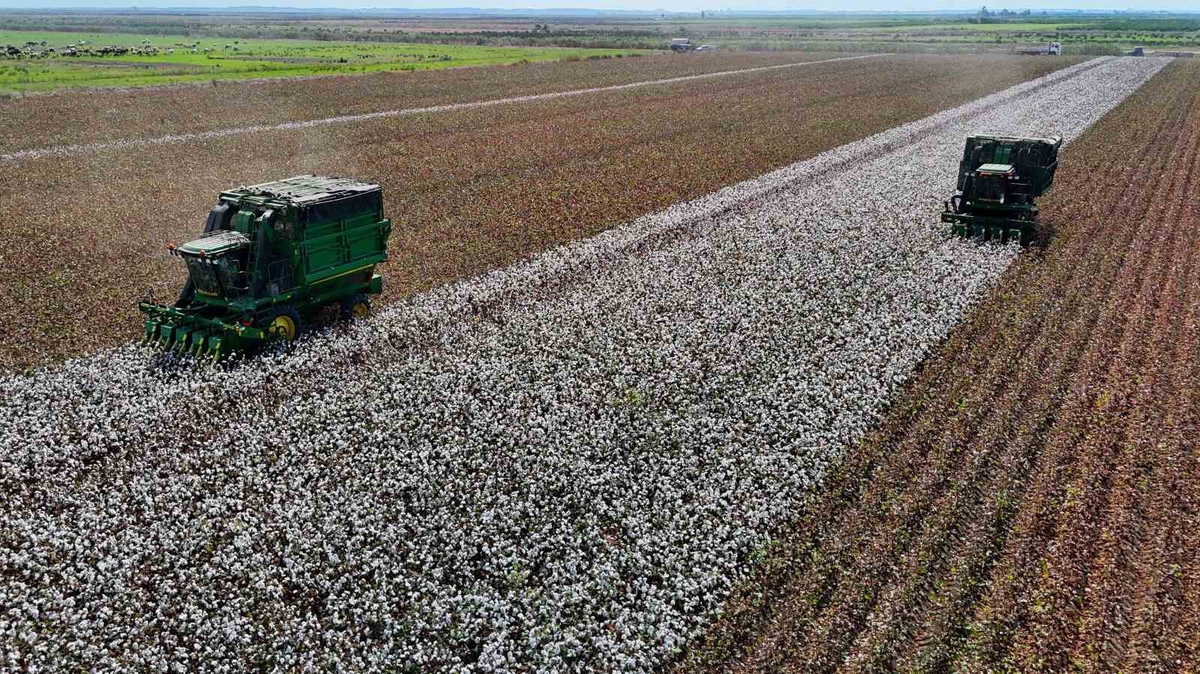
Turkey's earliest cotton of the season is being picked in Adana, where harvesting has begun in the coastal fields of the Karataş district. The opening farm-gate price is 40 lira per kilogram, and the province is expected to bring in about 230,000 tonnes this season, with rainfall credited for the higher yields, according to reports by haberler.com and gazetebirlik.com.
Early picking starts in Karataş
Adana is traditionally the province where Turkey's first early cotton, known locally as turfanda, reaches the market. Picking began in fields close to the sea in Karataş. Adana ranks fifth among Turkish provinces by cotton output, and the fibre is classed among the country's strategic crops.
Within the province, cotton is sown only in Karataş and Ceyhan, according to Mehmet Akın Doğan, head of the Yüreğir Chamber of Agriculture, who spoke to reporters during the harvest. He said growers there plant cotton on saline ground where no other crop will grow, and that wheat and sunflower are not viable alternatives on that land.
Çukurova acreage falls to 58,000 dönüm
Planted area is contracting. In the Çukurova region, cotton sowing fell to 58,000 dönüm this year — a dönüm is 1,000 square metres — which both publications attribute to wider crop diversification, lower cotton prices and higher input costs.
Farmers with no agronomic alternative continue to plant cotton and remain the region's contributors to agricultural output on that land. Neither report reconciles the 58,000 dönüm sowing figure with the 230,000 tonne provincial forecast, and no district-level breakdown of harvested area was published.
Margins depend on support payments
Doğan set out the economics on a per-dönüm basis:
- Expected yield: 400 kilograms per dönüm
- Production cost: 15,000 lira per dönüm
- Gross revenue at 40 lira per kilogram: 16,000 lira per dönüm
- State support: 1,652 lira per dönüm
On those figures the crop clears 1,000 lira per dönüm before support is counted. “Our farmer earns as much as the support that is given,” Doğan said. He called for the per-dönüm payment to be increased, and for the rule that withholds support when the same crop is sown for a third consecutive year to be eased in Karataş and Ceyhan, where rotation options are limited. “We expect positive discrimination for these areas,” he said.
Downstream demand across four industries
The crop supplies raw material to several processing chains at once: the fibre goes to textiles, the seed to the vegetable oil and animal feed industries, the linter to paper manufacturing, and the meal to livestock production. That spread means the Adana harvest feeds spinners, crushers and feed mills from the same bale.
Price formation, however, remains external. Doğan said domestic cotton prices are directly exposed to world prices because import duties on cotton cannot be raised. For Turkish spinners and ginners, the opening Adana price of 40 lira per kilogram sets the first domestic reference point of the season, ahead of the main harvest in the rest of the country.