Aceh sets top palm fruit price at Rp3,763/kg for 29 July–11 August period
Indonesia's Aceh province fixed the ceiling reference price for oil palm fresh fruit bunches at Rp3,763 per kilogram for 29 July to 11 August 2026, applying to plasma smallholder plots aged 10 to 20 years in eastern Aceh. The same schedule set crude palm oil at Rp15,657.13/kg and palm kernel at Rp14,466.59/kg. Western Aceh's top band was fixed Rp29 lower.
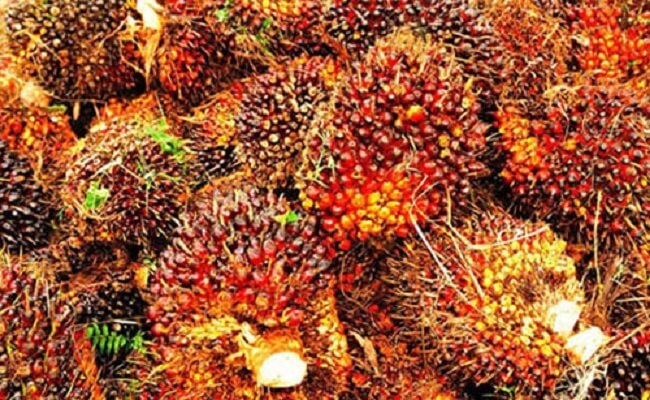
The government of Indonesia's Aceh province has set the top reference price for oil palm fresh fruit bunches (FFB) at Rp3,763 per kilogram for the fortnight running from 29 July to 11 August 2026. The ceiling applies to plasma smallholder plots carrying trees aged 10 to 20 years in eastern Aceh, the stage the province identifies as the most productive phase of the oil palm cycle. The schedule was issued by the Aceh Provincial Agriculture and Plantation Office and reported by InfoSAWIT Sumatera on Tuesday, 4 August 2026.
Prices set by the age of the stand
For plasma growers — smallholders contracted to a nucleus estate — Aceh prices fruit strictly by planting age. In the eastern part of the province the scale opens at Rp2,827 per kilogram for three-year-old trees and rises in steps to the Rp3,763 peak for stands of 10 to 20 years. Past that window the schedule turns down again, following the decline in yield as palms age beyond their productive prime.
The spread between the youngest priced category and the peak is Rp936 per kilogram, or roughly a third above the entry-level price. That gradient is the clearest signal in the table for anyone weighing replanting: fruit from young palms is bought at a structural discount for years before a renewed stand reaches the top band.
Independent growers priced on fruit composition
Smallholders outside the plasma scheme — known in Indonesia as swadaya growers — are not priced on tree age at all. Their fruit is valued on the composition of tenera and dura material in the delivered bunches, a proxy for oil extraction potential used where planting records and scheme documentation are absent.
The distinction carries commercial weight. Tenera and dura are different fruit types with different shell and mesocarp characteristics, and the mix delivered determines what a mill can extract from a load. Independent growers therefore absorb more of the quality risk at the ramp than their plasma counterparts, whose reference price is fixed by a documented planting date rather than by an assessment of the fruit itself.
East-west gap and processing benchmarks
In western Aceh the top band for plantings aged 10 to 20 years was fixed at Rp3,734 per kilogram, Rp29 below the eastern figure. The provincial office attributes the regional difference to variation in productivity, extraction rates and other technical factors weighed by the price-setting team.
The same decision set a reference price for crude palm oil (CPO) of Rp15,657.13 per kilogram and for palm kernel of Rp14,466.59 per kilogram. The K index — the coefficient determining what share of processed-product value returns to growers — was set at 89.86 per cent for eastern Aceh and 89.15 per cent for the west.
A benchmark, not a binding floor
The province presents the schedule as a reference for transactions between palm oil mills and growers during the two-week period, and as a source of price certainty for farmers facing continued volatility in palm oil markets. Resetting the table every fortnight keeps the benchmark close to prevailing crude palm oil and kernel values, and for smallholders in the province it is the main visible price signal ahead of negotiations with mills.
InfoSAWIT Sumatera notes that prices actually paid in the field can still differ, depending on agreement between the parties, the condition and quality of the fruit delivered, and the policy of the individual processing company. The published figures therefore function as a negotiating anchor rather than an enforceable floor. That leaves execution risk with growers who lack alternative outlets within trucking distance of their plots, since FFB must reach a mill within roughly a day of harvest before free fatty acid levels degrade the value of the load.