Abuja Declaration seeks a larger Nigerian share of the $100bn cocoa industry
The Abuja Declaration seeks to increase the value Nigeria and other African producers retain from cocoa. Africa grows 70% of the world’s cocoa but receives less than 10% of the industry’s value, estimated at $100 billion.
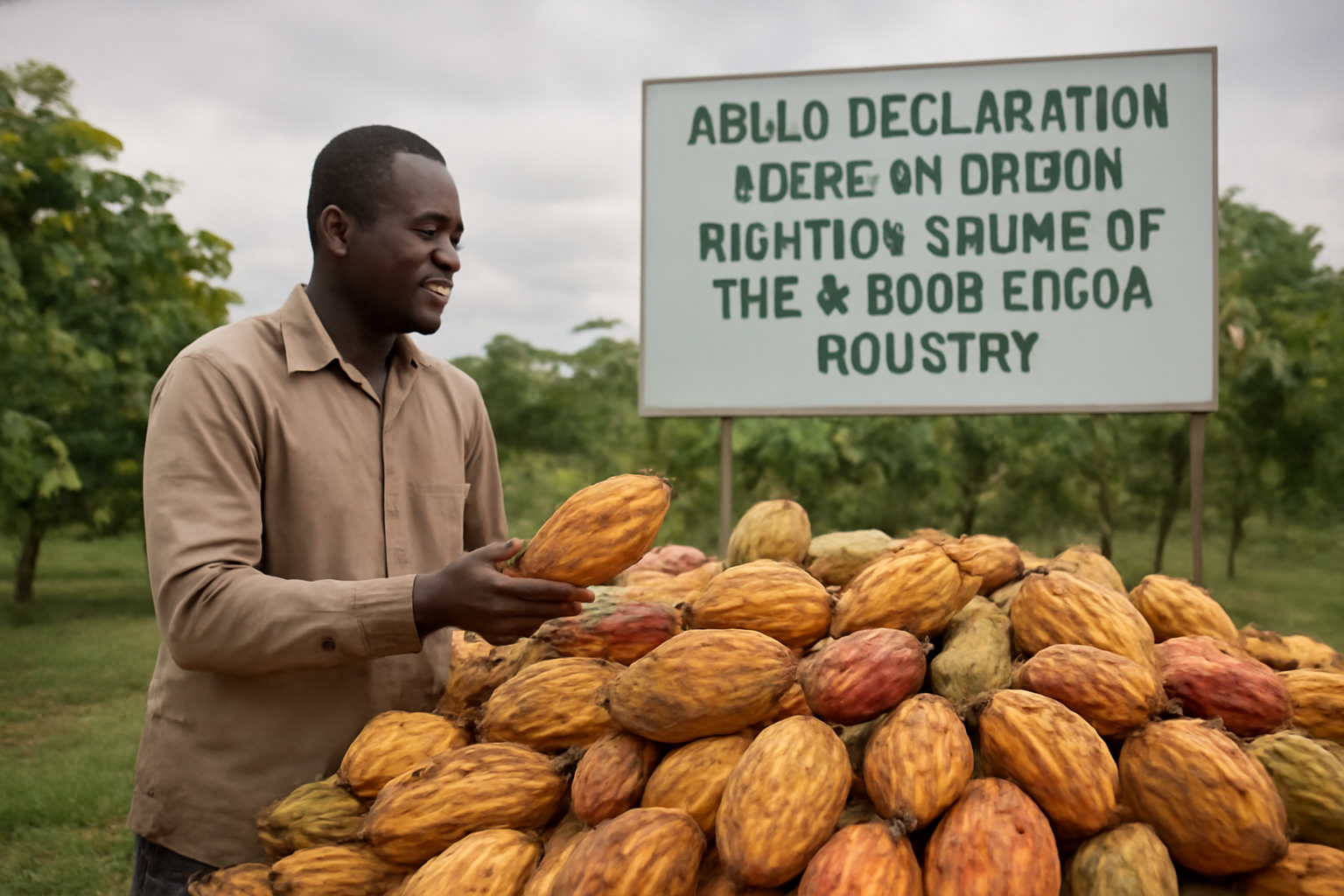
A wide gap between production and value
The Abuja Declaration is seeking a fairer share of the global cocoa industry for Nigeria, placing the division of value between producing countries and the rest of the supply chain at the centre of the debate. The industry is valued at $100 billion, but the African countries responsible for most cocoa production retain only a small part of that total.
Africa grows 70% of the world’s cocoa while earning less than 10% of the industry’s value. This disparity means that the continent’s dominant position in agricultural production has not translated into a comparable position in the higher-value parts of the cocoa economy.
The imbalance matters beyond farm income. The amount of value retained in producing countries affects the resources available to growers, processors and other domestic businesses connected to cocoa. It also shapes whether production regions can build a larger commercial role around the crop instead of remaining primarily suppliers of agricultural raw material.
Nigeria seeks more value from cocoa
For Nigeria, the Abuja Declaration frames cocoa as both an agricultural commodity and a value-distribution issue. Its objective is not simply to highlight Africa’s production share, but to improve the portion of industry value captured by Nigeria and the continent.
The figures illustrate the scale of the challenge. A region supplying 70% of global cocoa receives less than one-tenth of the value generated by a $100 billion industry. The remaining value is captured elsewhere across the wider cocoa chain and market.
A larger retained share would be relevant to several groups in Nigeria’s cocoa sector. Producers are directly exposed to the returns available from the crop, while processors depend on access to raw material and commercially viable domestic activity. Investors and traders also need to assess whether the declaration will be followed by measures capable of changing where value is created and retained.
Implementation will determine the impact
The declaration establishes an ambition, but the available information does not specify implementation measures, deadlines or numerical targets for Nigeria’s future share. Those details will be essential for judging whether the initiative can narrow the gap between Africa’s production weight and its financial return.
For industry participants, the key question is how the stated goal will affect commercial decisions across the sector. Producers will look for evidence that a greater portion of cocoa value reaches the origin market. Processors and investors will focus on whether the initiative creates conditions for more value-generating activity within Nigeria and other African producing countries.
The Abuja Declaration therefore brings a longstanding industry imbalance into a concrete Nigerian policy discussion. Africa’s 70% production share gives the continent a central role in global cocoa supply, but its less than 10% share of value shows that supply dominance alone does not determine earnings. The declaration’s significance will ultimately depend on whether its demand for fairness produces measurable changes for the businesses and farmers operating in cocoa-producing markets.