Abu Qurqas raises beet intake capacity to 7,500 tonnes a day
Egypt’s Abu Qurqas sugar complex aims to produce more than 140,000 tonnes of sugar this season after expanding daily beet intake capacity to 7,500 tonnes. The plant is also increasing output and exports of by-products used in feed and biofuel industries.
Beet intake capacity reaches 7,500 tonnes
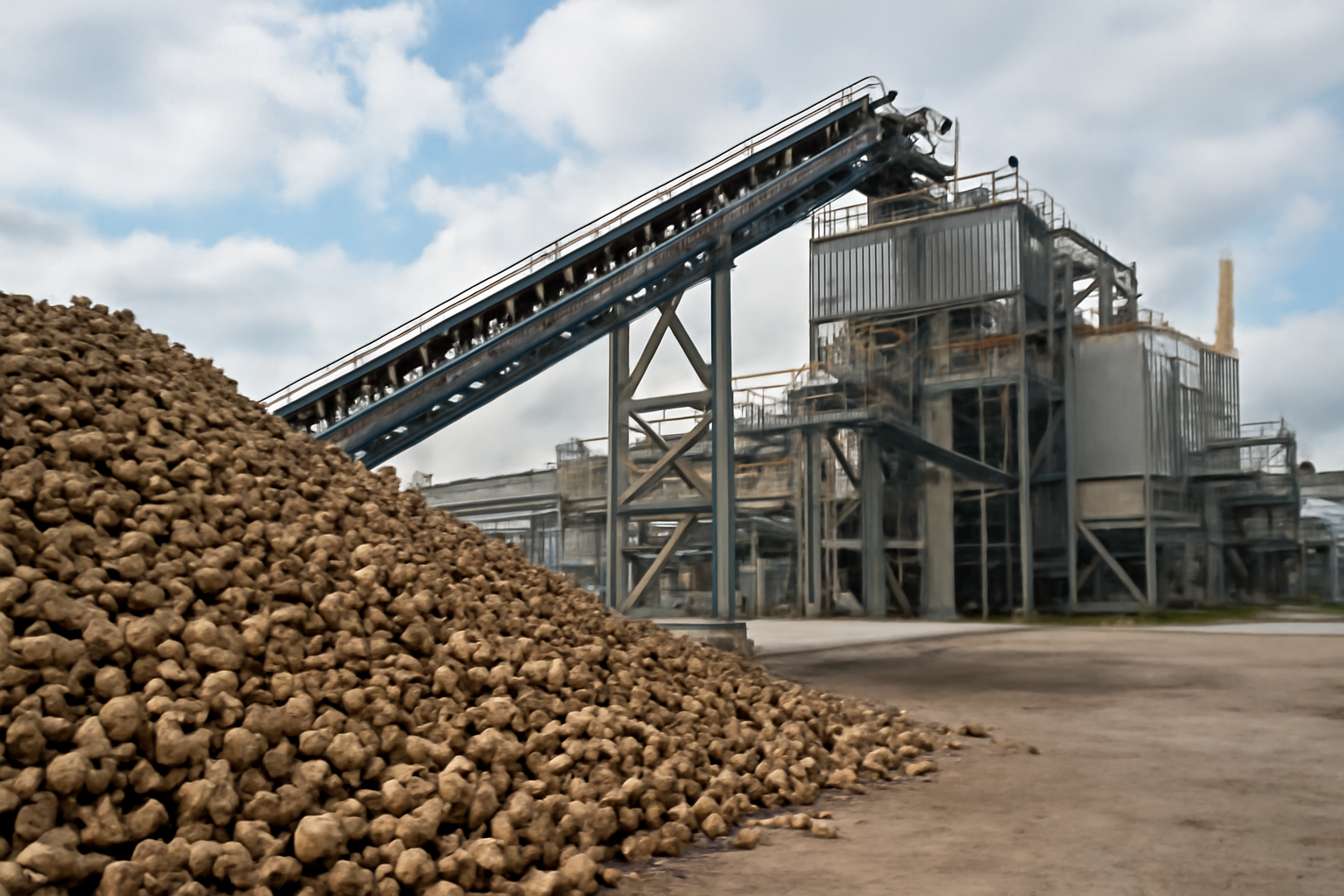
Egypt’s Abu Qurqas sugar complex in Minya governorate has raised its capacity to receive sugar beet to 7,500 tonnes per day for the current season, up from 7,000 tonnes last season and 6,000 tonnes before the recent development programme. The expansion is intended to accommodate larger crop volumes, shorten delivery times for growers and improve the utilisation of the processing lines.
Minya Governor Emad Kadwani reviewed beet deliveries and production during a visit to the complex, according to Akhbar El-Yom, Al-Masry Al-Youm and El Watan. The inspection covered mechanical unloading, the laboratory, extraction facilities, packing operations and sugar separation equipment. The plant runs around the clock in three shifts.
Mohamed Haidar, head of sectors at the New Abu Qurqas Sugar Factories, said the current campaign was among the strongest in the plant’s history. Beet deliveries began in March and remain under way. Minya has approximately 67,000 feddans planted with sugar beet this year, according to Mohamed Abdel Hamid Al-Owaisi, the governorate’s undersecretary for agriculture.
Sugar output targeted above 140,000 tonnes
The complex aims to produce more than 140,000 tonnes of sugar during the current season. Its raw-material base includes contracts covering 40,000 feddans of sugar beet and 12,000 feddans of sugar cane. The facility occupies 85 feddans and employs about 1,400 permanent workers, in addition to seasonal labour.
Sugar produced at Abu Qurqas is delivered to Egypt’s Ministry of Supply for distribution through the ration-card system. Part of the output is also allocated to state-affiliated consumer outlets. This makes the plant’s higher throughput relevant primarily to domestic availability, particularly the supply channels used for subsidised and publicly distributed food.
The expansion also connects farm logistics with factory efficiency. A higher reception rate can reduce queues during the harvest and limit delays before beet processing. For growers, the practical test will be whether the additional capacity keeps deliveries moving across the season; for the factory, it provides a larger crop base over which to spread continuous operating costs.
By-products add feed and export revenue
Alongside sugar, the complex targets 56,000 tonnes of molasses, 29,000 tonnes of white alcohol at a concentration of 95%, 23,000 tonnes of concentrated vinasse, 5,000 tonnes of dried vinasse and 600 tonnes of carbon dioxide. These streams extend the plant’s role beyond refined sugar into inputs for animal feed, alcohol and biofuel-related industries.
Exports of dried molasses used in animal feed increased from 29,000 tonnes last season to 46,000 tonnes in the current season, Haidar said. The rise gives the complex an additional outlet beyond Egypt’s regulated domestic sugar distribution system and generates export revenue from processing residues. For the wider industry, the operating results at Abu Qurqas show how higher beet intake and commercial use of by-products can support plant economics without relying solely on the value of the main sugar output.