Aboitiz Power Open to Joining Consortium for Philippines' First Coal Blending Terminal
Aboitiz Power Corp. has said it is open to joining a consortium that would build the Philippines' first centralized coal blending terminal, a facility the government has set as a target. The company is described as another early interested party rather than the first. Site, capacity, cost and timeline remain undisclosed, and no investment has been committed.
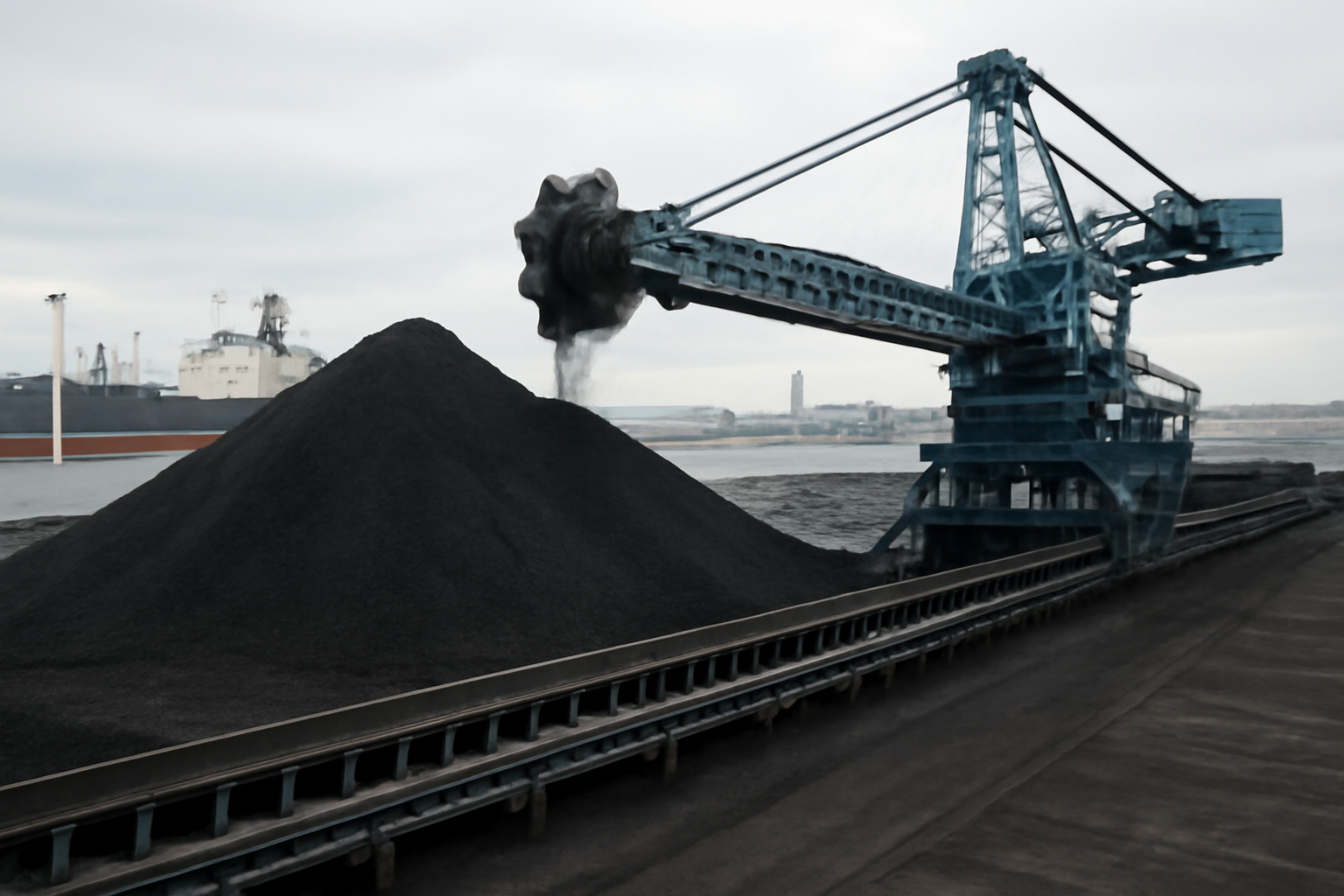
Aboitiz Power Corp. has said it is open to joining a consortium that would build the Philippines' first centralized coal blending terminal, making the listed power producer another early candidate for a facility the government has set as a target. The company's position was disclosed in Manila. It falls short of a firm commitment: no investment amount, equity share or partner list has been attached to it.
Key parameters of the project remain undisclosed — the site, throughput capacity, capital cost and construction schedule. Aboitiz Power was characterised as another early taker rather than the first, indicating that at least one other party had already signalled interest in the scheme before it.
Blending is a technical exercise, not a trading one
Thermal coal is bought on specification rather than as a uniform commodity. Cargoes differ in calorific value, sulphur, ash, moisture, volatile matter and grindability, and each boiler is designed around a narrow band of those parameters. Burning coal outside that envelope costs thermal efficiency, raises maintenance on mills and ash-handling systems, and can force load reductions.
Blending reconciles the two sides. Mixing a higher-energy cargo with a cheaper, lower-energy one produces a fuel that meets boiler specification at a lower delivered cost than buying to spec at origin. Philippine generators today manage this either by purchasing pre-blended cargoes from suppliers, blending in the ship's hold, or working stockpiles at individual plant jetties. Each of those routes is limited by vessel scheduling and by the storage available at a single site.
A centralized onshore terminal moves that step into a dedicated facility with stockyards, reclaimers and controlled mixing. In principle it allows several buyers to pool tonnage, hold a wider range of grades at once and produce consistent blends to order rather than cargo by cargo.
What it would mean for sourcing and logistics
The Philippines imports the bulk of the thermal coal it burns, with Indonesian supply dominant, while domestic output is concentrated in lower-rank grades. Coal remains the largest single source of electricity in the country, which makes fuel handling a system-level cost rather than a single company's problem. A blending hub widens the acceptable purchase window for buyers: low-rank domestic or Indonesian tonnage becomes usable in units that could not take it neat, provided a higher-energy cargo is on hand to lift the mix.
Scale is the second effect. Consolidating discharge into one terminal supports larger vessels and fewer port calls than plant-by-plant delivery, which is where any freight and demurrage savings would come from. It also creates a single deep inventory buffer instead of several shallow ones — a difference that shows up when supply is interrupted at origin, when weather closes loading ports, or when shipping is delayed.
Open questions before a consortium forms
The commercial structure matters as much as the concrete. A terminal jointly owned by competing generators raises questions the project's backers have not answered publicly:
- whether access is open to third parties or restricted to shareholders;
- how handling and blending tariffs are set, and by whom;
- siting relative to existing plant jetties and grid load centres;
- the equity split and who carries construction and utilisation risk;
- whether use of the facility is voluntary or mandated by policy.
For Aboitiz Power, stated openness to a consortium is a low-cost position at this stage of the project. The commercial test arrives when capacity, tariffs and offtake obligations are put on paper, and when the generators involved have to compare the terminal's blending fee against the cost of doing the same work at their own jetties.